Hi there, me again!
After listening to “1000 Words” from Final Fantasy X-2, I remembered something. In a lot of JRPG’s, they seem to use a musical piece as a plot device. In FFX-2, when Yuna sings this song to a crowd of people that had attended her concert, it summons the soul of Lenne, who is the deceased lover of the primary antagonist, Shuyin. It also caused the video screens that people were watching to show Lenne’s last memories, which were of her being brutally gunned down. She even sings the song in a duet with Yuna!

Final Fantasy X-2 – Yuna (Right) and Lenne (Left) sing “1000 Words”
Another good example is Fire Emblem Fates, and the song “Lost in Thoughts All Alone”, which has a mechanical effect as well as having plot significance. The mechanical effect is that the singer (which would either be Azura, or her son Shigure) gives another character another action this turn. It’s plot significance is that it is a magical song, which has various powers over dragons, those who bear the blood of dragons, or those affected by draconic magic. It comes with a drawback though; if sung outside of the cursed land of Valla, it causes the singer to suffer incredible pain, and if the song is sung to completion, the singer can be seriously injured. (In the Birthright route, when Azura uses the song to completion against King Garon during the final chapter, she ends up disolving into water and slowly dies)
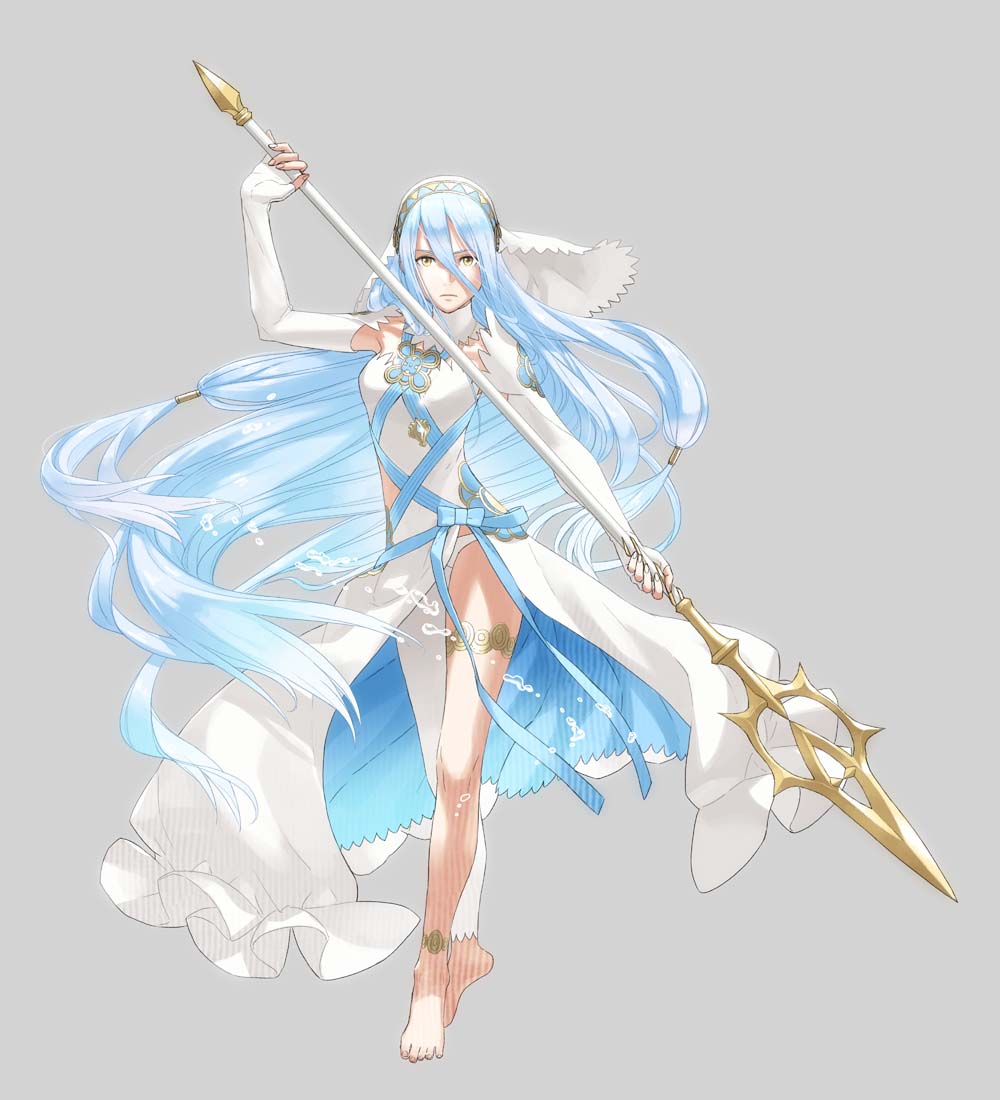
Fire Emblem Fates – Azura
Music has also been used in the Legend of Zelda series extensivley, in games such as Ocarina of Time, Majora’s Mask, The Wind Waker, Oracle of Ages, Spirit Tracks, to name a few. In each, the musical instrument is the source of the magic, especially when paired with certain songs, which can have a large array of effects raging from Weather Manipulation and Transportation, all the way to Teleportation and Time-Travel!
Other games such as EarthBound and Pokémon have also had special musical effects, usually required to advance the plot, or access some important content.
Here’s the most recognisable peice of plot-rleated Zelda music:
I’m debating whether to use Music as a plot device in my game, which although would require me to write it, it could prove to be interesting. If I have the time, as well as access to the right software and expertise, I may actually go with it. If not, I at least want to have some kind of music-based ability in my game. I find that it gives the player something memorable, which will make them remember the game. Serously, I have a hard time not crying when I hear the Orchestral Version of “1000 Words”!
Now this brings me to something that I’m going to have to look at: The difference between Diagetic and Non-Diagetic sounds. These are technical terms used in both the games and film industries, and they are used to denote whether or not the characters in the production are able to hear the sound. Diagetic sounds are audible to both the character and the audience, such as a door being slammed, the clashing of blades, or even character dialogue, whereas Non-Diagetic sounds can only be heard by the audience. An example of Non-Diagetic sound is the Avenger’s Theme from the Marvel Cinematic Universe.
Hopefully this has been interesting, and I hope to be back soon. So (quite literally!!) stay tuned!!!
Bibliography:
YouTube. (2010). Final Fantasy X-2 – Yuna & Lenne HD – 1000 WORDS. [online] Available at: https://www.youtube.com/watch?v=lhOS1RwDK90&t=3s [Accessed 25 Apr. 2019].
Finalfantasy.fandom.com. (n.d.). Final Fantasy Wiki. [online] Available at: https://finalfantasy.fandom.com/wiki/Final_Fantasy_Wiki [Accessed 25 Apr. 2019].
Fireemblem.fandom.com. (n.d.). Fire Emblem Wiki. [online] Available at: https://fireemblem.fandom.com/wiki/Fire_Emblem_Wiki [Accessed 25 Apr. 2019].
YouTube. (2011). Song of Time – The Legend of Zelda: Ocarina of Time. [online] Available at: https://www.youtube.com/watch?v=fL1VnXIAEUg [Accessed 25 Apr. 2019].

 SLGameDesign FMP