Hi everyone!
Over the last week, I’ve been playing the Golden Sun games on my GBA (I still have one!), and I found some story elements and mechanics that I particularly like, and that I’m considering for this project. Here’s a link to the FANDOM site for the series, which I’ve found quite helpful:
https://goldensun.fandom.com/wiki/Golden_Sun_Wiki
Before I get to that though, let me just go through a brief synopsis of the first two games (there is a third one for DS set 30 years after the first two, but I haven’t looked at it for this). The basic premise is along the lines of the “go-save-the-world” quest, but done from an interesting angle. I’ll try and avoid going into too much detail, as you may want to play the games yourself, so:
READER BEWARE: SPOLIER ALERT!!!
The first game starts as a group of Elemental Magic-users (or “Adepts” as referred to in-game) trying to stop the return of the “Alchemy”, an ancient and powerful supernatural force that has the potential to destroy the world. In order to release Alchemy upon the world, the four Elemental Lighthouses must be lit using the power of four magical jewels that contain the world’s entire Elemental Magic. Also, the player’s party has to follow a group of magic-users hell-bent on restoring Alchemy, and who are holding one of the characters primary love interest’s hostage, along with her brother and tutor. The game ends with two of the Lighthouses being lit; Mercury (the Element of Water and Ice), and Venus (the Element of Earth and Nature). The final boss is the two leaders of the antagonistic group, but the love interest character and the tutor are no-where to be found.
The second game filps things around, starting shortly before the end of the first game, answering some of the unanswered questions from the first installment. It opens shortly before the end of the first game, with the player controlling the aforementioned love interest; a Fire Adept in her own right, accompanied by the tutor. After a short escape from the geologically unstable Venus Lighthouse, they are joined by her brother; an Earth Adept, as well as another character that was also taken as a hostage during the first game, who is also an Adept who specialises in Wind Magic. They are later joined by a Water Adept who hails from the ancient kingdom of Lemuria, and who is older than all of the characters in both games PUT TOGETHER! They then continue the quest to ignite the remaining Lighthouses; Jupiter (the Element of Wind and Lightning), and Mars (the Element of Fire and Heat). During their quest they learn that if Alchemy isn’t restored, then the world will slowly waste away. Joing with the characters from the first game (who are at a default level unless the player uses a data transfer from the first game into the second), and as an eight-man group, they set out to save the world.
Post-game, it turns out that everyone was a pawn of the Mercury Adept Alex (the cousin of the first game’s Mercury Adept, Mia) and his grand plan to attain deification (godhood). He intended to ignite the Lighthouses in order to obtain the power of the titular “Golden Sun”, which is the combined power of all four elements. Luckily, during the opening events of the first installment, the monolithic “Wise One” (A giant rock with a single eye, that floats in the air) modified the Mars Star (the Jewel containing the world’s Fire Magic) to give some of it’s power to Isaac, the Venus Adept who is technically the primary protagonist. Alex is then cripled and left to die at the summit of Mt. Aleph, underneath the Golden Sun. Although his fate is left unclear at the end of the second game, Alex in fact does survive as he appears as a major villain/anti-hero in the third game.
SPOILERS END HERE
Mechanically, Golden Sun is a JRPG, plain and simple. Except it isn’t. It draws upon a large quantity of ancient cultures and myths to enrich itself. The core story and gameplay mechanics are based upon the classical greek elemental theory as described aby Aristotle, as well as the writings of the 16th Century Swiss Alchemist Paracelsus; whose actual name was Philippus Aureolus Theophrastus Bombastus von Hohenheim (The name “Von Hohenheim” was also used in the Fullmetal Alchemist Manga/Anime series as the inspiration for a powerful Alchemist character called Van Hohenheim, but I digress). Acording to the aforementioned elemental theory, there are four elemental forces: Fire, Water, Earth, and Air; which are in a state of perpetual balance (Fire opposes Water, and Earth opposes Air). Acoording to this model, the four elements are what make up the building blocks of reality, with everything containing more or less of each element according to it’s own compositon. The elements also exist in their purest form, as well as variant forms such as Ice (which is frozen water).
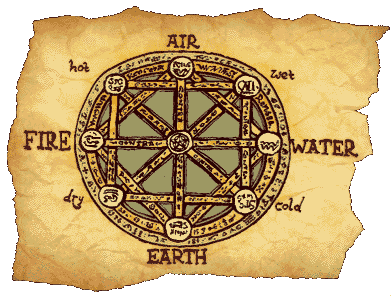
A Diagram representing Greek Elemental Theory (Aristotelian) 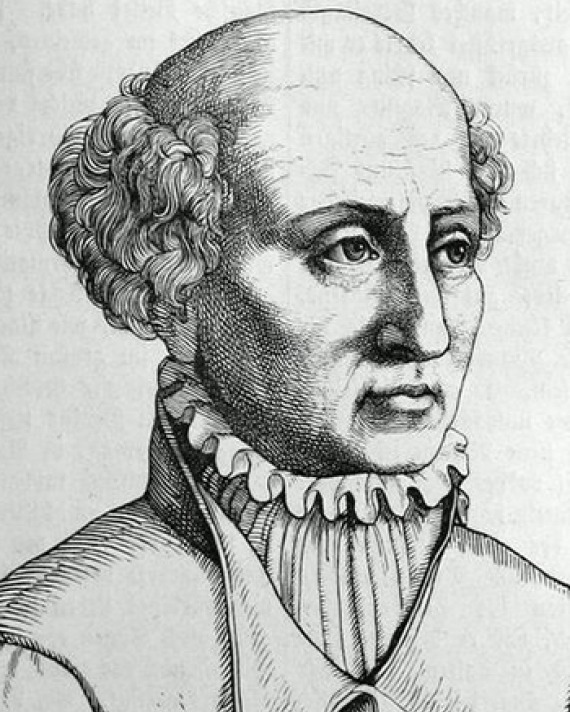
Paracelsus –
Philippus Aureolus Theophrastus Bombastus von Hohenheim
Golden Sun – Series Logo
Golden Sun uses this model as the fundamental basis of it’s magic and character progression systems. Psynergy (the series name for magic) is based upon the elements, as each character innately specialises in one of the elements. There are two types of Psynergy; Utility Psynergy and Battle Psynergy. Battle Psynergies are used in a traditional way, being the spells that the characters can cast in battle to invoke various effects, such as damage, healing, or status effects. Some can also be used outside of battle, such as healing spells. Utility Psynergy on the other hand, is used outside battle to manipulate the environment; such uses include moving far off objects, freezing puddles, or even limited flight. Additionally, there are some battle Psynergies that double up as utilitiy Psynergies, such as Douse (conjouring water out of the air), Growth (causing vines to grow rapidly), Frost (which freezes puddles into usable pillars), and Whirlwind (a small cyclone that clears away debris), just to name a handful.

Golden Sun: The Lost Age – Prologue 
Golden Sun – Battle 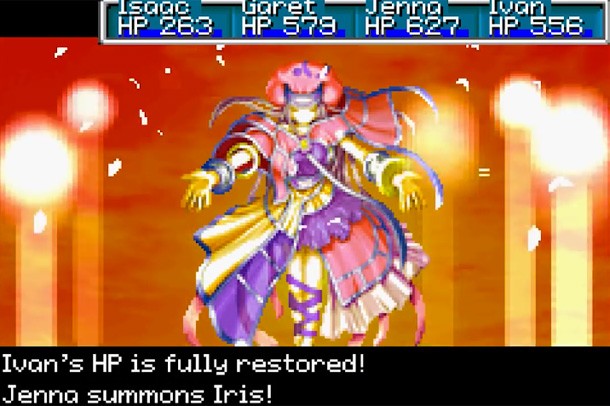
Golden Sun: The Lost Age – Summoning 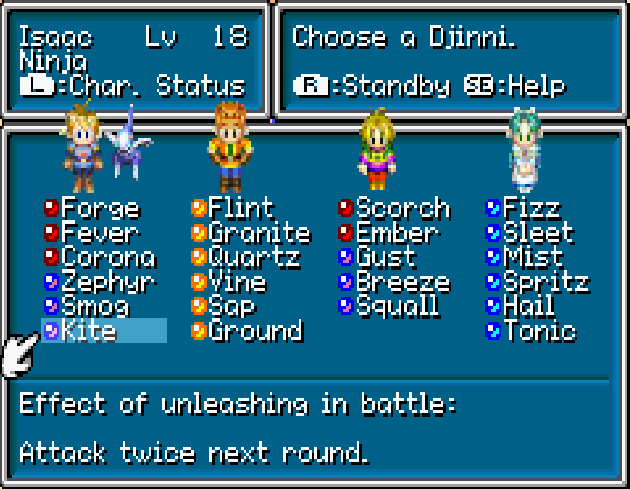
Golden Sun – Djinn Allocation Menu
Throughout the game, the player collects Djinn (which are based upon arabic and islamic mythology) which are aligned to a particular element. Assigning the Djinn to the party increases their stats, grants new spells, and changes their character class. Character classes are not used in a traditional sense, as they are changeable mid-battle (I’ll get to that in a minute), and only influence their abilities; they aren’t a cardboard cutout template like they are in other games. Djinn also have a two other abilities; first of which is they can be used directly in battle to provide a powerful magical effect, like attacking foes, applying or removing status effects, or changing or restoring stats or health. By doing so, they’re then useable for a second purpose; summoning mythological creatures that inflict massive damage on foes. However after they’ve been used in battle or for summoning, they stop influencing character spells and stats until theyve been re-set upon the character. Also, after using Djinn to summon, they go into a recovery period. this makes it impossible to use them to boost characters, use their abilities, or to summon for a short period of time afterwards.
The characters are also incredibly well-written, with intricate story arcs and personalities. Here’s the official artwork of each of the characters for you to look at before I start talking about them in any detail:
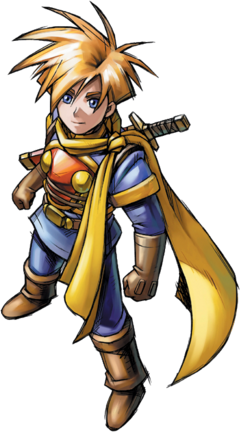
Isaac (Golden Sun) – Venus Adept 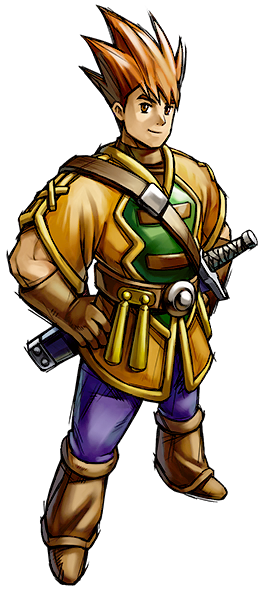
Garet (Golden Sun) – Mars Adept 
Ivan (Golden Sun) – Jupiter Adept 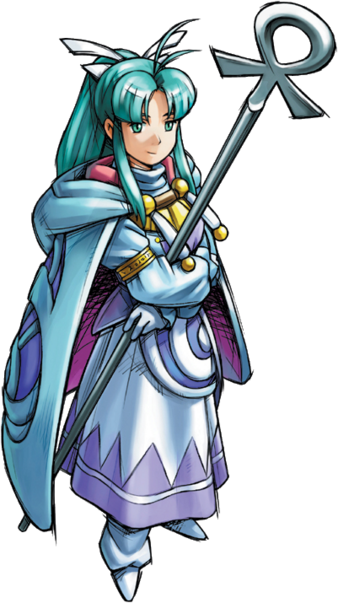
Mia (Golden Sun) – Mercury Adept (Alex’s Cousin) 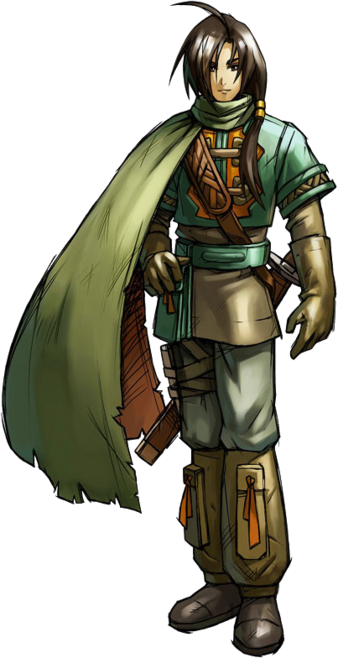
Felix (Golden Sun: The Lost Age) – Venus Adept (Jenna’s Brother) 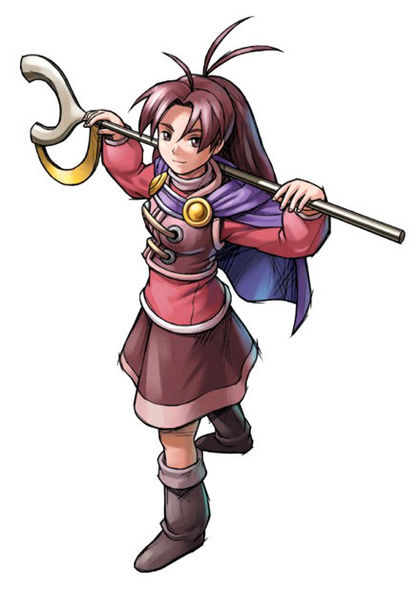
Jenna (Golden Sun: The Lost Age) – Mars Adept (Felix’s Sister) 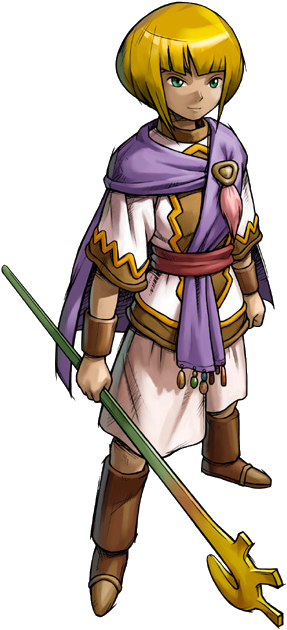
Sheba (Golden Sun: The Lost Age) – Jupiter Adept 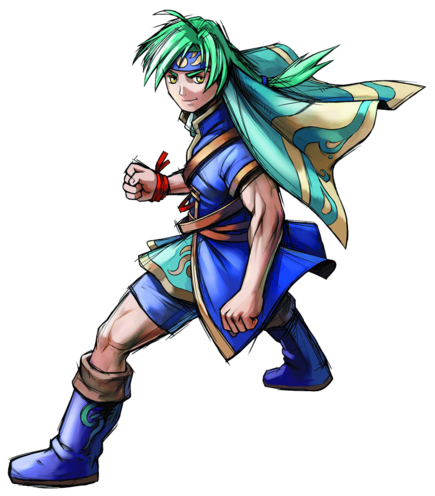
Piers (Golden Sun: The Lost Age) – Mercury Adept 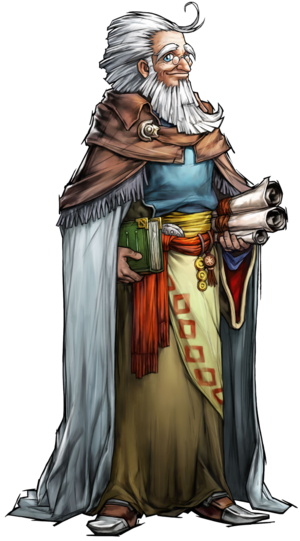
Kraden (Golden Sun + Golden Sun: The Lost Age) – Alchemy Scholar 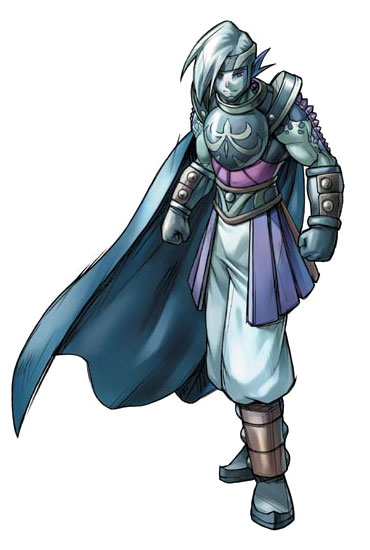
Saturos (Golden Sun) – Mars Adept (Primary Antagonist) 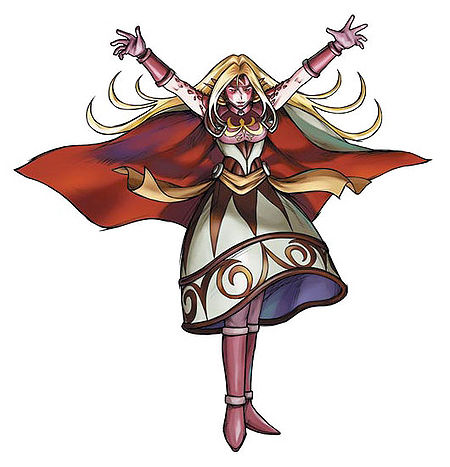
Menardi (Golden Sun) – Mars Adept (Primary Antagonist + Karst’s Older Sister) 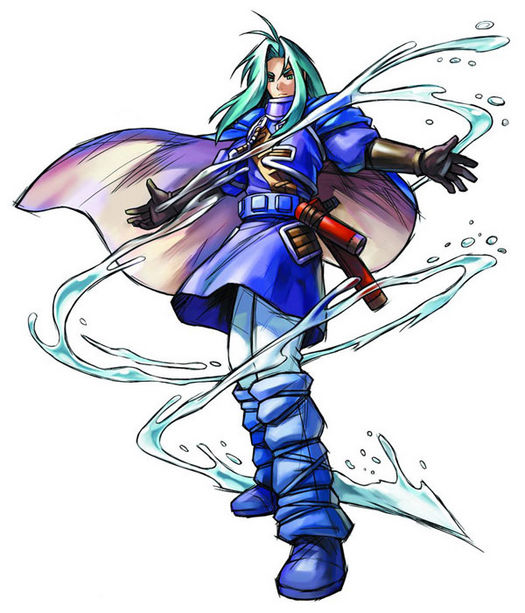
Alex (Golden Sun + Golden Sun: The Lost Age) – Mercury Adept (Mia’s Cousin + Main Instigator) 
Karst (Golden Sun: The Lost Age) – Mars Adept (Primary Antagonist + Menardi’s Younger Sister) 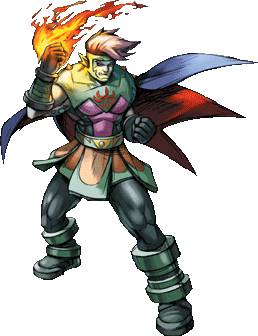
Agatio (Golden Sun: The Lost Age) – Mars Adept (Primary Antagonist)
I’ve also created a Pinterest Mood Board based on the series, made of a mixture of fan art, official pieces, and other relevant works. Here’s the link for you now:
I find the character designs particularly interseting, as they draw from a wide variety of cultural origins. For example, Issac is primarily designed on Medieval European, as opposed to Sheba, who looks more asian or mesoamerican. Also, there’s a mixture of styles in clothing shown across the cast, with Mia is wearing quite heavy robes in all of the artwork, as she comes from a frigid northern village, whereas Ivan is wearing light, slightly loose-fitting clothes due to his upbringing in a hotter environment. In some of the official art, it shows several of them actually casting Psynergy, but the way they each cast looks decidedly different; Issac’s is a great show of power, Ivan concentrates heavily, and Mia gracefully meditates. This helps show a bit of characterisation that wouldn’t otherwise be shown by pixel sprites. There is also a reason for the difference; not only do the characters wield different powers, they also learned how to use their powers differently. A perfect comparison is between Mia and Ivan: Mia is the heir to a long line of Mercury Adepts, with knowledge of what her own powers were and were they came from. Ivan on the other hand wasn’t raised anywhere near other Adepts, so his powers grew without him truly understanding them. He only found out about the true nature of his powers after meeting Isaac, and then reuiniting with his long lost sister, Hama.
I’ve probably gone on long enough at this point, so I’ll close for now. I’m hoping to go into some more detail about this series (as well as a few other game series), and what I intend to use as inspiration. So until then!
Bibliography:
Goldensun.fandom.com. (2019). Golden Sun Universe. [online] Available at: https://goldensun.fandom.com/wiki/Golden_Sun_Wiki [Accessed 31 Mar. 2019].

 SLGameDesign FMP